Lighten Up: The Effects of Far Infrared (FIR) on Water
The Effects of Far Infrared on Internal Water
Far infrared light does not simply warm the body. It interacts with the structured water inside tissue, supporting circulation, cellular energy, recovery, resilience, and biological performance at a foundational level.
The Miraculous Work of Water
When we speak of life, we often speak of cells, DNA, proteins, or mitochondria. Yet beneath all of them lies the element that quietly makes biology possible: water.
Water is far more than hydration. It stores energy, transmits charge, supports structure, drives motion, and participates in nearly every biological process inside the human body.
Internal Water: More Than Liquid
The body is roughly 60–70% water, but much of that water is not free-floating liquid. It forms delicate molecular layers around proteins, membranes, collagen, and DNA.
Along these hydrophilic surfaces, water organizes into a more structured, semi-crystalline arrangement known as Exclusion Zone water — sometimes called the fourth phase of water.
This structured water behaves differently than ordinary liquid water. It excludes particles, maintains a negative charge, and stores potential energy through natural charge separation.
Resonance With Far Infrared Light
The energy required to build and maintain structured water comes largely from radiant energy — especially within the far infrared spectrum.
The biologically important FIR range falls between 7 and 14 microns, with an especially significant resonance point near 9.4 microns, where water absorbs infrared energy efficiently.
When tissues absorb FIR within this range, structured water layers may become larger, more ordered, and more charged. This strengthens natural charge separation throughout tissue and supports biological energy.
What Structured Water Helps Drive
Chemical Work
Supporting enzymatic reactions, nutrient utilization, and metabolic efficiency throughout the body.
Electrical Work
Helping maintain ion gradients, membrane signaling, and nervous system communication.
Mechanical Work
Assisting circulation, lymphatic flow, tissue hydration, and vascular movement.
Optical Work
Influencing how tissue interacts with and transmits radiant energy throughout the body.
Why FIR Feels Different Than Ordinary Heat
A traditional heat source can warm the skin. Far infrared works differently. FIR interacts with the water structures inside tissue, helping organize and energize the body from within.
Rather than brute-force surface heating, FIR operates through resonance — transferring energy into the biological systems already designed to absorb and use it.
The Effects of FIR Over Time
Short Term: 1–3 Weeks
Circulation improves, sweating begins more efficiently, and many individuals notice better sleep, calmer nervous system activity, and a lingering sense of relaxation after sessions.
Medium Term: 4–12 Weeks
Repeated FIR exposure may support stronger baseline tissue hydration, improved mitochondrial efficiency, enhanced cellular repair responses, and more stable autonomic nervous system balance.
Long Term: 3+ Months
Over time, the body becomes more resilient. Recovery improves, circulation adapts more efficiently to stress and temperature changes, and many individuals report a steadier background sense of vitality.
Practical Cadence
Consistency matters more than intensity. Three to five sessions per week, lasting roughly 15–40 minutes, allows the body to gradually adapt and integrate FIR into its own biological rhythms.



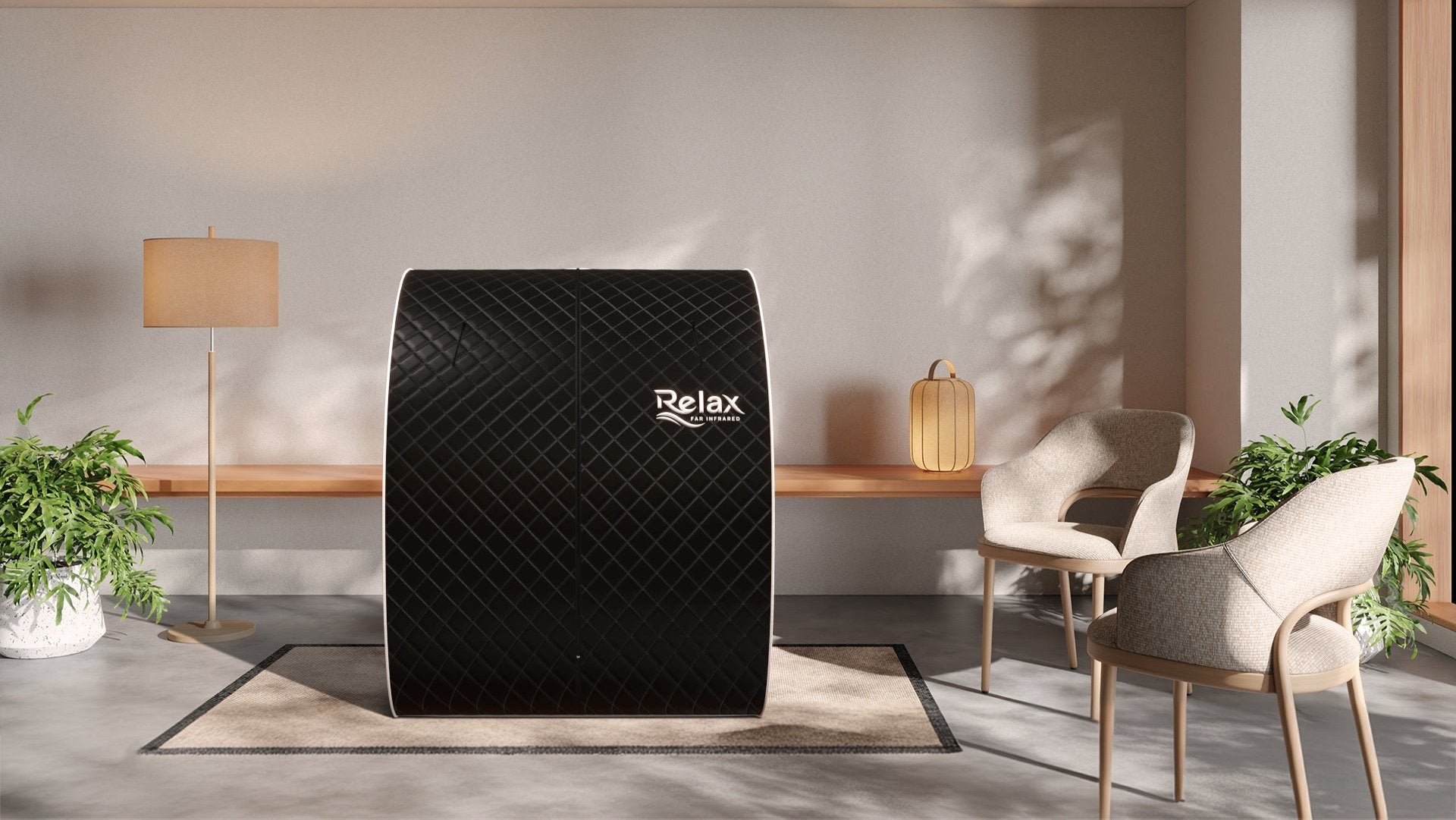
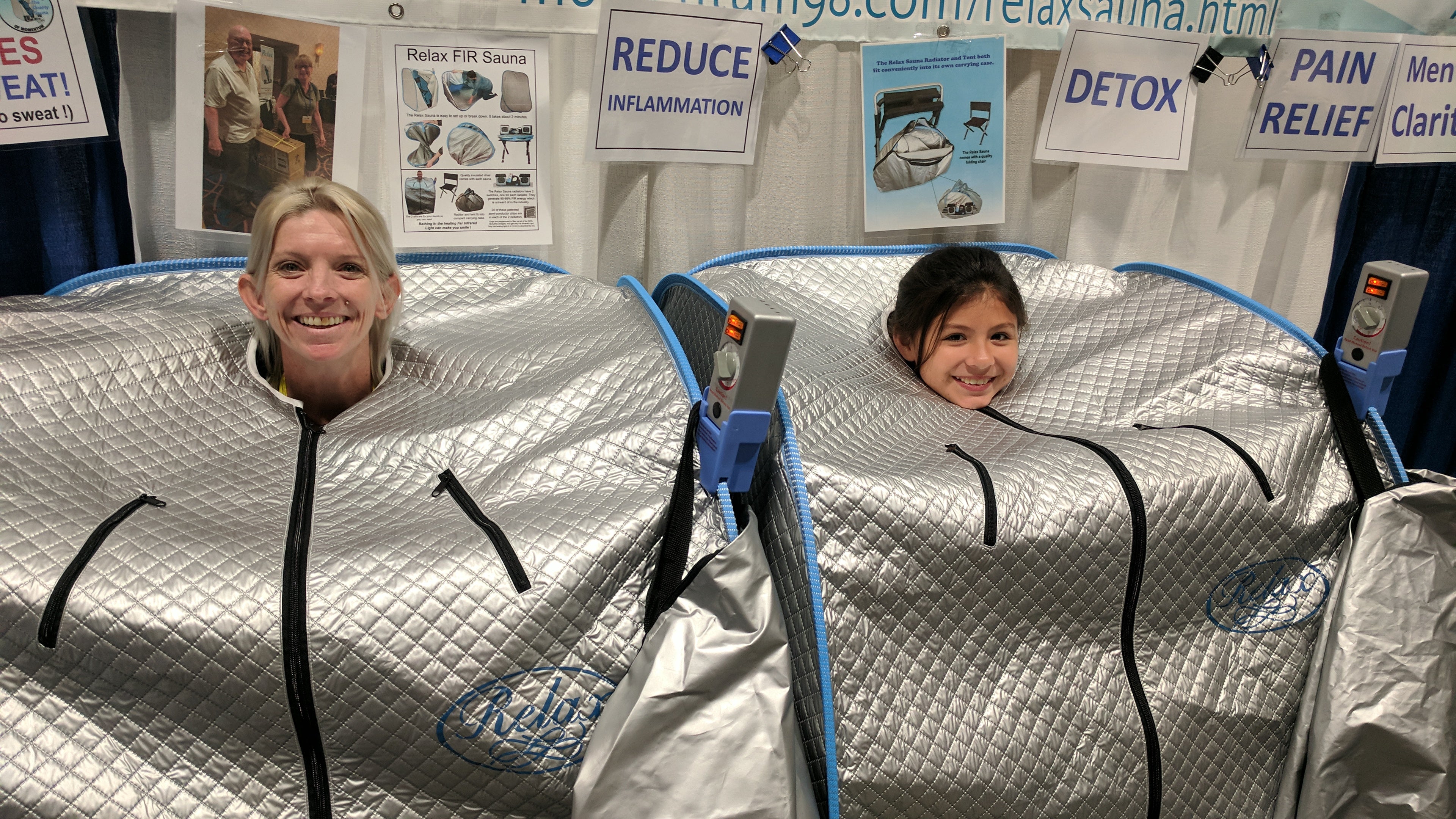
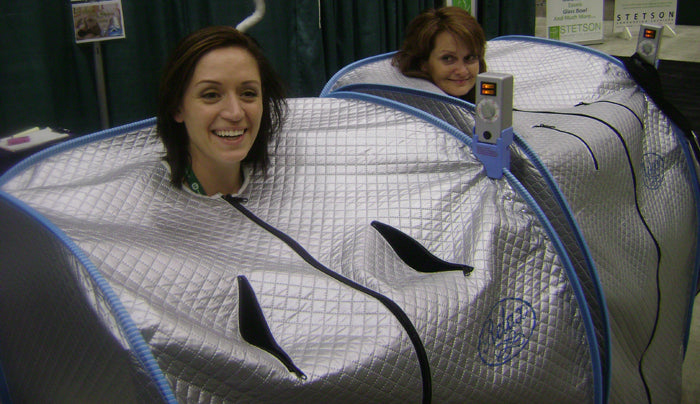
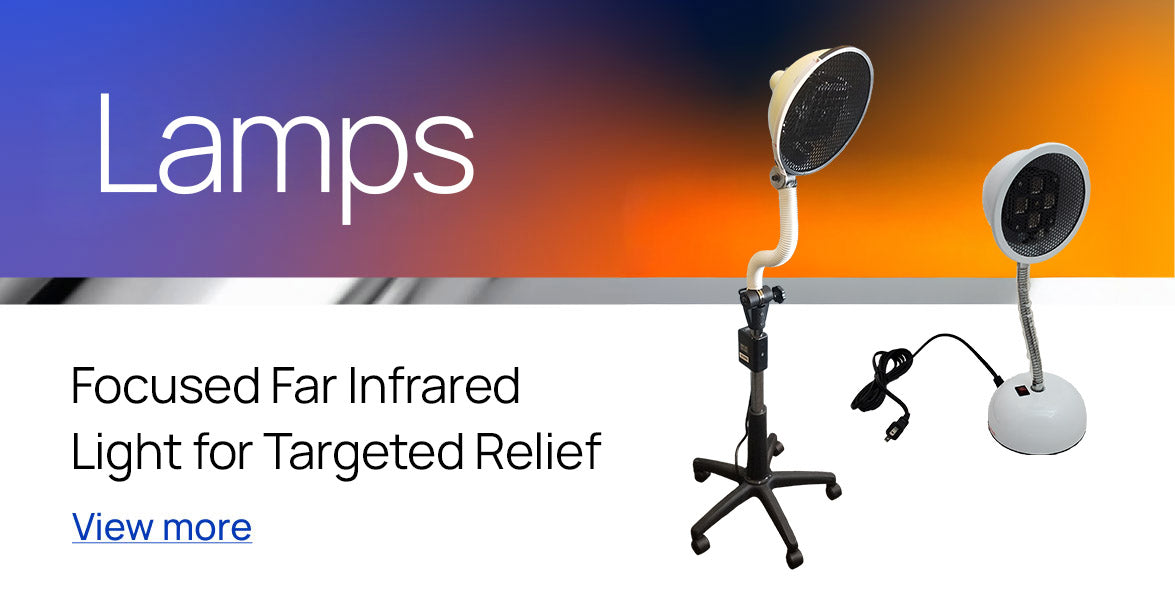
Explore the Relax Far Infrared Line Up


Feel the Momentum